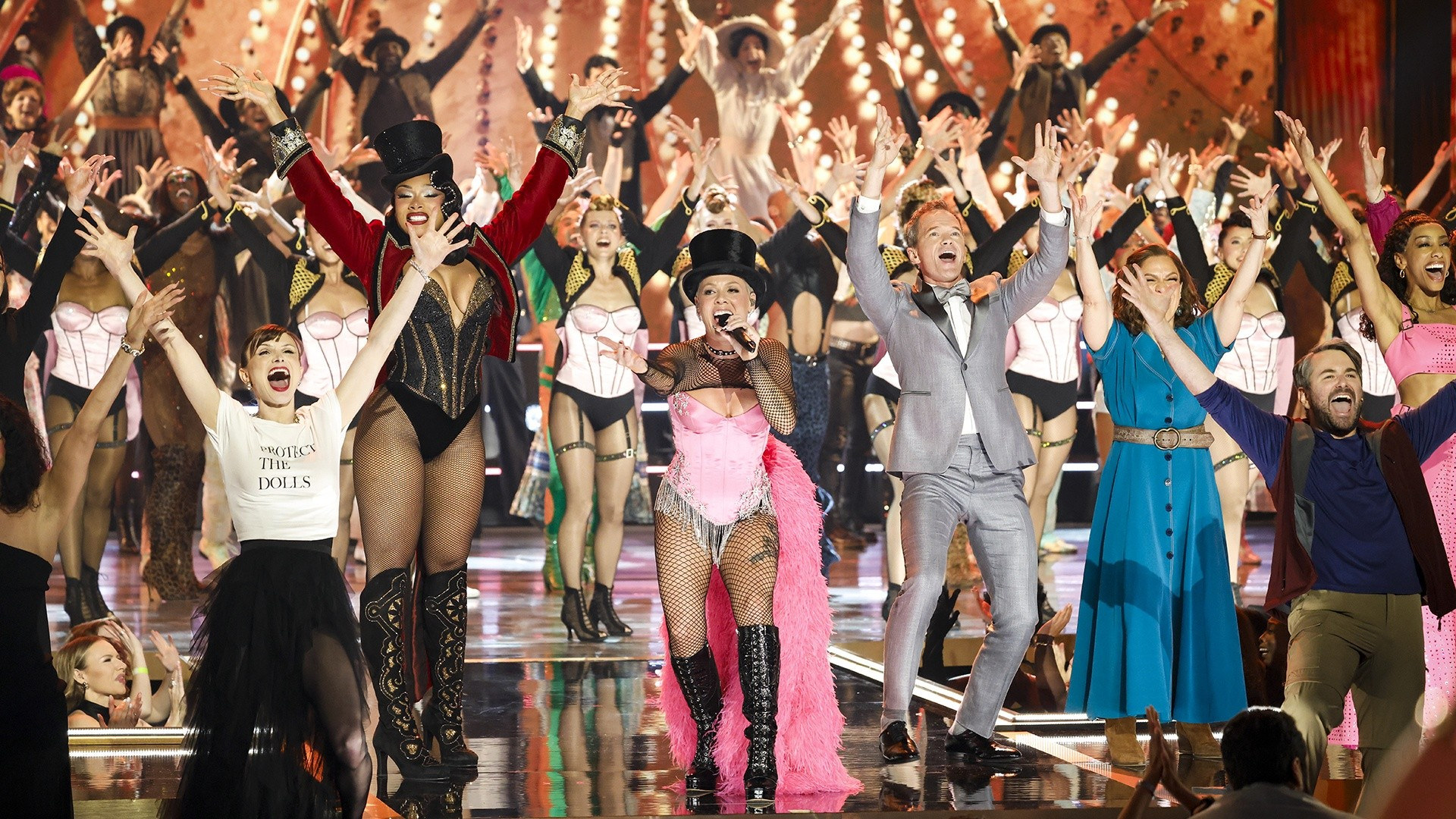
Happy Post-Tony Awards to all that celebrate!
I woke up Monday morning tired from a late night watching the Tony Awards on tv, and lying in bed reeling over the performances I watched and the dreams of others coming true. I sat with the same joy in my heart and a fire in my soul that I did watching the Tony Awards as a kid. The little twang of anxiousness waiting to hear if my favorite shows and performers were going to win. This year I was partial to The Lost Boys.
Whether you’re in the Broadway community, or your local theater community, or just a casual attender, this is the one night a year our love and passion for theater comes alive. It’s a reminder of why we do what we do.
All of the speeches had wonderful takeaways, but the quote that stuck with me the next morning came from one of Pink’s segments. The artist said:
“This year the worst parts of history began repeating itself, and we were given Ragtime and Liberation. This year our country grew more divided than ever, and we were given Two Strangers (Carry a Cake Across New York). This year our trans siblings started to lose even more rights, and we were given Cats: The Jellicle Ball.”
Now this is exactly our “why” for entering the theater industry. It is the desire for us to open the minds and hearts of our neighbors so that they may be able to reach out a hand of connection, empathy, and advocacy to one another.
It is within these quotes that get me thinking about the marketing of a show to get audiences in the room to experience this communal bonding. You see, there is a difference between marketing a show, and telling your audience why the story actually matters. One does the source material an injustice, while the other is what brings its purpose to life.
When we rely on the traditional marketing of our shows, we will rise and fall at the quality of our content and production. If we only focus on the latest celebrity casting, we will only draw a crowd as long as the next show doesn’t book a bigger name. In this case, if we only focus on awards and accolades, we will only find success as far as nostalgia goes.
Now in me saying this, by no means do I think any of these marketing methods are inherently wrong. I want to see the quality of our content and productions be on the cutting edge of innovation and art. The past few years of record breaking gross sales on Broadway has shown the power of celebrity casting. Likewise, awards and accolades provide the credibility backing the wider audiences need to confirm that what they are about to see is worth the hard earned money spent.
Despite all of our marketing efforts, the most effective marketing still is and always will be word of mouth. When someone sees your production and feels a deep resonance with what they have seen, the passion by which they advocate for your work far exceeds any ads they might see. I have seen it within my own life. There have been shows that have moved me so deeply that I would tell my friends, family, coworkers, and anyone I would come in contact with about it. My love for the pieces had me bursting so much that I was looking for anyone to tell.
What moves people to this type of love is rooted in the story being told right before them. So if that’s where the love comes from, then that’s where our marketing has to start too. Here’s what that can actually look like.
Say the “why” out loud, before you say anything else. Don’t let your audience guess at why a show might matter to them, tell them. A line like “what would you sacrifice for success” or “a story about what happens when people stop seeing each other” does more to get someone in the door than a plot synopsis ever will, because it puts them inside the story before the curtain even goes up.
Hand the mic to the people already feeling it. Your cast, your crew, your early audiences, they’re already having the reaction you want everyone else to have. A cast member talking honestly about why a role hits close to home, or a post-show audience reaction caught on video, will land harder and feel more real than anything polished marketing could produce. That’s the same energy I had telling everyone I knew about a show I couldn’t stop thinking about, just pointed outward.
Find the version of the story your community needs to hear. The same show can mean different things depending on what a community is already living through. A production of Rent in a city in the middle of a housing crisis isn’t telling the same story as a Rent revival on Broadway, even if the script is identical. Figure out what your audience is already carrying, and show them where the story meets them.
Give people a reason to talk about it. Talkbacks, post-show conversations, even a simple prompt on social media asking what line or moment stuck with someone, all of these give people a reason to put their reaction into words. That’s often the first step before they turn around and tell someone else, which is exactly the kind of word of mouth we said matters most.
None of this replaces a strong production, a great cast, or an awards push. But it gives all of that something to stand on. People remember why a story mattered to them long after they’ve forgotten who was in it.
This is the real invigorating work for those of us in theater marketing. We didn’t do this to just get people in seats, but to help them feel, before they ever sit down, why this story is theirs too. If we can do that, the Tony Awards stop being a once a year reminder of why theater matters, and they become a reflection of the rooms we’ve been building all along.